PTThe Paper Trail Project
Verified current memberFEC candidate record

Ashley Hinson Arenholz

Republican · U.S. House · IA-02

Ashley Hinson is a Republican U.S. representative from IA's 2 congressional district. Ashley Hinson has served in Congress since 2021. Paper Trail tracks organization-affiliated PAC contributions, committee assignments, legislation, and documented organization connections associated with this member.

Congressional data updated Sep 16, 2026
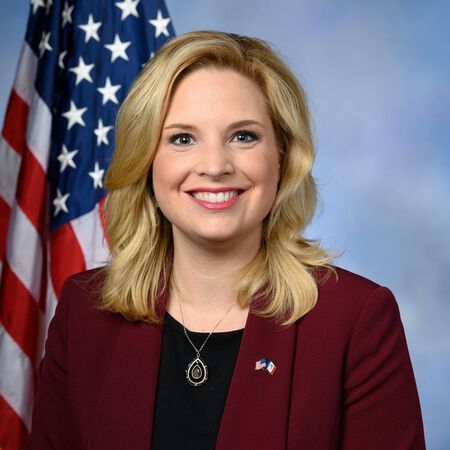
Official portrait of Ashley Hinson Arenholz
Public-source portrait

At a Glance

Highlights from available records. Missing information does not mean an activity did not occur.

Federal Election Commission

Campaign Financial Summary

FEC campaign totals are tied to this politician’s verified candidate ID and authorized committees. Contributions received are separate from independent expenditures and other outside spending.

2025–2026 cycle

FEC-reported campaign totals

FEC candidate record ↗
Receipt completeness is not yet available. Treat itemized totals as partial.
Total raised$10,217,845
Total spent$5,396,429
Candidate loansNot reported
Authorized-committee transfersNot reported
Cash on handNot reported
Debts owedNot reported
Total contributionsNot reported
IndividualsNot reported
Receipt categories and non-individual contributors
Party committees—
Other political committees—
Candidate contributions$0
Total loans—
Other federal receipts—
Operating-expense offsets—
Refunded individual contributions—

Itemized non-individual receipts

These Schedule A records exclude individual contributors and memo-only rows. They are categorized from immutable FEC committee IDs and metadata. Summary totals also include unitemized receipts, transfers, loans and adjustments, so this itemized subtotal is not expected to equal total raised.

No itemized non-individual receipts are available for this cycle.

2023–2024 cycle

FEC-reported campaign totals

FEC candidate record ↗
6 of 181 FEC receipt pages imported0 of 1 authorized committees complete · 100 Schedule A records stored. Itemized totals below are partial and will rise as the import continues.
Total raised$5,600,532
Total spent$3,740,906
Candidate loansNot reported
Authorized-committee transfersNot reported
Cash on handNot reported
Debts owedNot reported
Total contributionsNot reported
Individuals$3,253,295
Receipt categories and non-individual contributors
Party committees$5,500
Other political committees$1,522,307
Candidate contributions$0
Total loans—
Other federal receipts—
Operating-expense offsets$17,515
Refunded individual contributions$12,400

Itemized non-individual receipts

These Schedule A records exclude individual contributors and memo-only rows. They are categorized from immutable FEC committee IDs and metadata. Summary totals also include unitemized receipts, transfers, loans and adjustments, so this itemized subtotal is not expected to equal total raised.

Other political committees$22,175
PACs$6,000
ASHLEY HINSON VICTORY COMMITTEEOther political committees · C00718221 · 1 receipt$15,000
SCALISE LEADERSHIP FUND 2024Other political committees · C00857144 · 1 receipt$7,175
BUILDING AMERICA'S REPUBLICAN REPRESENTATION PACPACs · C00572271 · 1 receiptParent organization awaiting reviewPAC - Qualified$2,000
CORTEVA, INC. EMPLOYEES PAC (CORTEVA AGRISCIENCE PAC)PACs · C00247981 · 1 receiptParent organization awaiting reviewPAC - Qualified$1,000
DENTONS US LLP PACPACs · C00216127 · 1 receiptParent organization awaiting reviewPAC - Qualified$1,000
AMERICAN SUPPLY ASSOCIATION POLITICAL ACTION COMMITTEEPACs · C00166074 · 1 receiptParent organization awaiting reviewPAC - Qualified$1,000
LIVESTOCK MARKETING ASSOCIATION POLITICAL ACTION COMMITTEE (LMA-PAC)PACs · C00244400 · 1 receiptParent organization awaiting reviewPAC - Qualified$1,000

Canonical FEC Schedule A receipts

FEC-Identified PAC Contributions

Net itemized PAC receipts

$02025–2026 cycle

Gross itemized PAC receipts

$0Before refunds and offsets

Refunds / offsets

$0

Largest identified PAC

None recorded

This replaces the older recipient-side PAC estimate. Every row comes from the candidate campaign’s Schedule A filings and is identified by FEC committee ID. Parent organizations appear only after review; names never create the link.

No itemized PAC receipts are currently available for this cycle.

Institutional position

Current Committee Assignments

Paper Trail legislation records

Sponsored & Cosponsored Measures by Topic

Labor & EmploymentJustice & Civil Rights
H.R. 1869 — Protecting American Industry and Labor from International Trade Crimes Act of 2026

Sponsor · Protecting American Industry and Labor from International Trade Crimes Act of 2025 This bill requires the Department of Justice to establish a task force, program, or other similar structure within its Criminal Division to investigate and prosecute trade-related crimes.

HealthSocial Services
H.R. 2048 — Metastatic Breast Cancer Access to Care Act

Cosponsor · Metastatic Breast Cancer Access to Care Act This bill expedites payment of Social Security Disability Insurance (SSDI) benefits and eligibility for Medicare coverage for those with metastatic breast cancer (i. e. , breast cancer that has spread to other sites in the body). Specifically, the bill eliminates the 5-month waiting period for SSDI benefits and the subsequent 24-month waiting period for Medicare coverage for individuals with metastatic breast cancer.

Defense & National Security
H.R. 1502 — North Platte Canteen Congressional Gold Medal Act

Cosponsor · North Platte Canteen Congressional Gold Medal Act This bill provides for the award of a Congressional Gold Medal to recognize the individuals and communities that provided financial and other support for the North Platte Canteen in North Platte, Nebraska, during World War II.

Labor & Employment
H.R. 1548 — Leveling the Playing Field 2.0 Act

Cosponsor · Leveling the Playing Field 2. 0 Act This bill addresses unfair trade practices by making various changes to U. S. antidumping and countervailing duty laws.

Health
H.R. 2005 — DMEPOS Relief Act of 2025

Cosponsor · DMEPOS Relief Act of 2025 This bill extends until December 31, 2025, a higher payment rate (known as the 75/25 blended rate) for durable medical equipment in nonrural or noncontiguous areas under Medicare.

Economy & Finance
H.Con.Res. 4 — Expressing the sense of Congress that tax-exempt fraternal benefit societies have historically provided and continue to provide critical benefits to the people and communities of the United States.

Cosponsor · This concurrent resolution expresses the sense of Congress that tax-exempt fraternal benefit societies serve as a private economic and social support system, providing benefits to their members is necessary to support the charitable and fraternal activities of the volunteer chapters, and their work should continue to be promoted.

Health
H.R. 1520 — Charlotte Woodward Organ Transplant Discrimination Prevention Act

Cosponsor · Charlotte Woodward Organ Transplant Discrimination Prevention Act This bill expressly prohibits health care providers and other entities involved in matching donated organs with recipients from denying or restricting an individual's access to organ transplants solely on the basis of the individual's disability, except in limited circumstances. Specifically, these entities may consider an individual's disability when making decisions about transplants only if a physician finds, based on an individualized evaluation, that the individual's physical or mental disability is medically significant to the provision of the transplant. A disability shall not be considered medically significant if the individual has an adequate support system in place to comply with transplant-related medical requirements. These entities must also make reasonable changes to their policies to make transplants and related care more available to individuals with disabilities.

EducationJustice & Civil Rights
H.R. 309 — National Law Enforcement Officers Remembrance, Support, and Community Outreach Act

Cosponsor · National Law Enforcement Officers Remembrance, Support and Community Outreach Act. [ sic ] This bill temporarily directs the Department of the Interior to award a grant to the National Law Enforcement Officers Memorial Fund for the expenses associated with operating and enhancing the community outreach, public education, and officer safety and wellness programs of the National Law Enforcement Museum.

Transportation
H.R. 3151 — SHIPS for America Act of 2025

Cosponsor · Referred to the Subcommittee on Coast Guard and Maritime Transportation.

Economy & Finance
H.R. 425 — Repealing Big Brother Overreach Act

Cosponsor · Repealing Big Brother Overreach Act This bill repeals the Corporate Transparency Act. The act requires existing companies and newly created companies to report beneficial ownership information to the Department of the Treasury’s Financial Crimes Enforcement Network for purposes of addressing the financing of terrorism and money laundering.

Economy & Finance
H.R. 2089 — Generating Retirement Ownership through Long-Term Holding

Cosponsor · Referred to the House Committee on Ways and Means.

Government & Elections
H.R. 45 — FIND Act

Cosponsor · Firearm Industry Non-Discrimination Act or the FIND Act This bill prohibits the federal government from entering into contracts with an entity that discriminates against firearm trade associations or businesses that deal in firearms, ammunition, or related products. Specifically, the bill requires a federal agency to include in each contract for the procurement of goods or services awarded by the agency a clause requiring the prime contractor to certify that it (1) has no policy, practice, guidance, or directive that discriminates against a firearm entity or firearm trade association; and (2) will not adopt a policy, practice, guidance, or directive that discriminates against a firearm entity or firearm trade association during the term of the contract. The bill establishes (1) a similar requirement with respect to subcontracts, and (2) penalties for violations. The bill makes such prohibition inapplicable to a contract for the procurement of goods or services that is a sole-source contract.

Economy & Finance
H.R. 2547 — Secure Family Futures Act of 2025

Cosponsor · Referred to the House Committee on Ways and Means.

Health
H.R. 1317 — I CAN Act

Cosponsor · Improving Care and Access to Nurses Act or the I CAN Act This bill allows other health care providers besides physicians (e. g. , nurses) to provide certain services under Medicare and Medicaid. Among other changes, the bill (1) allows a nurse practitioner or physician assistant to fulfill documentation requirements for Medicare coverage of special shoes for diabetic individuals; (2) expedites the ability of physician assistants, nurse practitioners, and clinical nurse specialists to supervise Medicare cardiac, intensive cardiac, and pulmonary rehabilitation programs; and (3) allows nurse practitioners to certify the need for inpatient hospital services under Medicare and Medicaid.

HousingEconomy & Finance
H.R. 2355 — Collegiate Housing and Infrastructure Act of 2025

Cosponsor · Referred to the House Committee on Ways and Means.

HealthScience & Technology
H.R. 1672 — Maintaining Investments in New Innovation Act

Cosponsor · Maintaining Investments in New Innovation Act This bill requires drug products with genetically targeted technology to have had market approval for at least 11 years in order to qualify for the Medicare Drug Price Negotiation Program. (The program requires the Centers for Medicare & Medicaid Services to negotiate the prices of certain prescription drugs under Medicare beginning in 2026. Among other requirements, drugs must have had market approval for at least 7 years (for drug products) or 11 years (for biologics) to qualify for negotiation. )

Health
H.R. 1227 — Alternatives to PAIN Act

Cosponsor · Alternatives to Prevent Addiction In the Nation Act or the Alternatives to PAIN Act This bill reduces cost-sharing and prohibits the imposition of certain utilization requirements under the Medicare prescription drug benefit for certain non-opioid pain management drugs. Specifically, the bill requires such drugs to be covered without a deductible and to be placed on the lowest cost-sharing tier (if any). The bill also prohibits the imposition of prior authorization requirements (i. e.

Economy & Finance
H.R. 1181 — Protecting Privacy in Purchases Act

Cosponsor · Protecting Privacy in Purchases Act This bill prohibits payment card networks from using merchant codes that distinguish firearms retailers from general-merchandise retailers or sporting-goods retailers. The Department of Justice must enforce this bill and report annually on the resulting investigations and cases.

Science & TechnologyJustice & Civil Rights
H.R. 2978 — GUARD Act

Cosponsor · Guarding Unprotected Aging Retirees from Deception Act of 2026 or the GUARD Act of 2026 This bill allows state, local, and tribal law enforcement agencies and grantees that receive funds from certain law enforcement grant programs to use the funds to investigate general financial fraud, elder financial fraud, and pig butchering. Pig butchering refers to a confidence and investment fraud in which a victim is gradually lured into transferring increasing amounts of money, generally in the form of cryptocurrency, into a fake virtual investment. The bill allows federal law enforcement agencies to assist state, local, and tribal law enforcement agencies and fusion centers in the use of tracing tools for blockchain and related technology tools. Finally, the bill requires the Financial Crimes Enforcement Network (FinCEN) to report on efforts to combat general financial fraud, elder financial fraud, pig butchering, and scams, including an evaluation of any legislative recommendations to improve the efforts.

Defense & National SecurityVeterans
H.R. 1004 — Love Lives On Act of 2025

Cosponsor · Love Lives On Act of 2025 This bill extends entitlement for various benefit programs and services for surviving spouses of deceased members of the Armed Forces or veterans. The bill provides that the remarriage of a surviving spouse must not bar the furnishing of dependency and indemnity compensation or special pension benefits to such spouse. Additionally, the Department of Defense may not terminate the payment of an annuity for a surviving spouse under the Survivor Benefit Plan solely because the surviving spouse remarries. The bill also expands the definition of a dependent under TRICARE to include a remarried widow or widower whose subsequent marriage has ended due to death, divorce, or annulment.

Health
H.R. 2199 — Restore Protections for Dialysis Patients Act

Cosponsor · Restore Protections for Dialysis Patients Act This bill specifies certain requirements for private health insurers regarding coverage of individuals with end stage renal disease (ESRD) who are also covered under Medicare. In particular, the bill specifies that insurers may not limit benefits, including limiting network composition, in a manner that will affect ESRD Medicare beneficiaries differently compared to others without ESRD. The bill additionally specifies that insurers are not required to include a particular renal dialysis provider or a particular number of such providers as part of their networks.

Economy & Finance
H.R. 1628 — 761st Tank Battalion Congressional Gold Medal Act

Cosponsor · Referred to the Committee on Financial Services, and in addition to the Committee on House Administration, for a period to be subsequently determined by the Speaker, in each case for consideration of such provisions as fall within the jurisdiction of the committee concerned.

Justice & Civil Rights
H.R. 1773 — Federal Firearms Licensee Protection Act of 2025

Cosponsor · Federal Firearms Licensee Protection Act of 2025 This bill modifies criminal penalties for an offense involving the theft of a firearm from a licensed importer, manufacturer, or dealer, or from their business premises. Specifically, the bill does the following: increases from 10 to 20 years the maximum prison term, and creates a 3- or 5-year mandatory minimum prison term for an offense that occurs during the commission of a burglary or robbery. An attempt to commit an offense is subject to the same penalties as a substantive offense.

Education
H.R. 2555 — Freedom of Association in Higher Education Act of 2026

Cosponsor · Freedom of Association in Higher Education Act of 2025 This bill establishes freedom of association protections for college students in single-sex social organizations. Specifically, the bill gives students (or groups of students) enrolled at institutions of higher education (IHEs) the right to form or join social organizations, including single-sex social organizations. Additionally, the bill prohibits IHEs that participate in federal student aid programs from taking adverse actions against single-sex social organizations or students who are members or prospective members of such organizations based solely on the practice of limiting membership to only individuals of one sex; taking actions that require or coerce members or prospective members of such organizations to waive protections provided under the bill, including as a condition of enrolling in the IHE; or imposing a recruitment restriction on a single-sex social organization that is not imposed upon other student organizations, unless the organization and IHE have entered into a written agreement allowing the restriction.

Economy & Finance
H.R. 987 — Fair Access to Banking Act

Cosponsor · Fair Access to Banking Act This bill places restrictions on certain banks, credit unions, and payment card networks if they refuse to do business with a person who complies with the law. Restrictions include prohibiting the use of electronic funds transfer systems and lending programs, termination of an institution's depository insurance, and specified civil penalties. Banks and other specified financial institutions are allowed to deny financial services to a person only if the denial is justified by a documented failure of that person to meet quantitative, impartial, risk-based standards established in advance by the institution. This justification may not be based upon reputational risks to the institution.

Justice & Civil Rights
H.R. 1551 — Protect and Serve Act of 2025

Cosponsor · Referred to the House Committee on the Judiciary.

Labor & Employment
H.R. 1232 — National Right-to-Work Act

Cosponsor · Referred to the House Committee on Education and Workforce.

Justice & Civil Rights
H.R. 38 — Constitutional Concealed Carry Reciprocity Act of 2025

Cosponsor · Constitutional Concealed Carry Reciprocity Act This bill establishes a federal statutory framework to regulate the carry or possession of concealed firearms across state lines. Specifically, an individual who is eligible to carry a concealed firearm in one state may carry or possess a concealed handgun (other than a machine gun or destructive device) in another state that allows its residents to carry concealed firearms. It sets forth requirements for lawful concealed carry across state lines. The bill preempts most state and local laws related to concealed carry and establishes a private right of action for a person adversely affected by interference with a concealed-carry right established by this bill.

Agriculture & FoodEconomy & Finance
H.R. 1707 — Grown in America Act of 2025

Cosponsor · Grown in America Act of 2025 This bill establishes a new tax credit (as part of the general business tax credit) for domestically produced agriculture. Specifically, the bill allows a tax credit for the lesser of (1) 25% of domestically produced agricultural commodity expenses multiplied by the ratio of such expenses to total agricultural commodity expenses (excluding expenses for agricultural commodities that cannot feasibly be produced domestically), or (1) $100 million. (Conditions apply). To qualify for the tax credit, a business’s average expenses (over three years) for domestically produced agricultural commodities must exceed a certain percentage of total agricultural commodity expenses (excluding expenses for agricultural commodities that cannot feasibly be produced domestically).

ImmigrationGovernment & Elections
H.R. 22 — SAVE Act

Cosponsor · Safeguard American Voter Eligibility Act or the SAVE Act This bill requires individuals to provide documentary proof of U. S. citizenship when registering to vote in federal elections. Specifically, the bill prohibits states from accepting and processing an application to register to vote in a federal election unless the applicant presents documentary proof of U.

Economy & Finance
H.R. 196 — Family and Small Business Taxpayer Protection Act

Cosponsor · Family and Small Business Taxpayer Protection Act This bill rescinds unobligated funds that were provided by the Inflation Reduction Act of 2022 to the Internal Revenue Service (IRS) for enforcement activities related to the determination and collection of taxes, for operations support for taxpayer services and enforcement activities, and for a task force to research options for a free, direct electronic filing (e-filing) tax return system. The bill also rescinds unobligated funds that were provided by the Inflation Reduction Act of 2022 for expenses of the Treasury Inspector General for Tax Administration, Office of Tax Policy, U. S. Tax Court, and offices within the Department of the Treasury that provide oversight and support for the IRS.

Health
H.R. 7 — No Taxpayer Funding for Abortion and Abortion Insurance Full Disclosure Act of 2025

Cosponsor · No Taxpayer Funding for Abortion and Abortion Insurance Full Disclosure Act of 2025 This bill modifies provisions relating to federal funding for, and health insurance coverage of, abortions. Specifically, the bill prohibits the use of federal funds for abortions or for health coverage that includes abortions. Such restrictions extend to the use of funds in the budget of the District of Columbia. Additionally, abortions may not be provided in a federal health care facility or by a federal employee.

Labor & EmploymentGovernment & Elections
H.R. 142 — Regulations from the Executive in Need of Scrutiny Act of 2025

Cosponsor · Regulations from the Executive in Need of Scrutiny Act of 20 25 This bill revises provisions relating to congressional review of agency rulemaking. Specifically, the bill establishes a congressional approval process for a major rule. A major rule may only take effect if Congress approves of the rule. A major rule is a rule that has resulted in or is likely to result in (1) an annual effect on the economy of $100 million or more; (2) a major increase in costs or prices for consumers, individual industries, government agencies, or geographic regions; or (3) significant adverse effects on competition, employment, investment, productivity, innovation, or the ability of U.

Defense & National SecurityImmigration
H.R. 32 — No Bailout for Sanctuary Cities Act

Cosponsor · No Bailout for Sanctuary Cities Act This bill makes a state or political subdivision of a state ineligible for any federal funds that the jurisdiction intends to use to benefit non-U. S. nationals (i. e.

Immigration
H.R. 30 — Preventing Violence Against Women by Illegal Aliens Act

Cosponsor · Preventing Violence Against Women by Illegal Aliens Act This bill establishes certain criminal grounds for making non-U. S. nationals ( aliens under federal law) inadmissible and expands the crimes for which a non-U. S.

Government & Elections
H.R. 151 — Equal Representation Act of 2025

Cosponsor · Equal Representation Act This bill requires that the statement sent by the President to Congress after the decennial census indicating the number of persons in each state exclude noncitizens. (This statement is the basis for reapportionment of U. S. Representatives.

Defense & National SecurityImmigration
H.R. 29 — Laken Riley Act

Cosponsor · Laken Riley Act This bill requires the Department of Homeland Security (DHS) to detain certain non-U. S. nationals ( aliens under federal law) who have been arrested for burglary, theft, larceny, or shoplifting. The bill also authorizes states to sue the federal government for decisions or alleged failures related to immigration enforcement.

HousingEducationEconomy & Finance
H.R. 137 — TCJA Permanency Act

Cosponsor · TCJA Permanency Act This bill makes permanent multiple federal tax provisions enacted in 2017 by the Tax Cuts and Jobs Act. The bill makes permanent the individual tax rates of 10%, 12%, 22%, 24%, 32%, 35%, and 37%; increased standard deduction; personal exemption allowance repeal; exclusion from income of student loans discharged due to death or disability; qualified business income tax deduction (199A tax deduction); allowance of ABLE account contributions in excess of the annual gift tax exclusion amount; base estate and gift tax exclusion amount of $10 million (adjusted annually); and alternative minimum tax exemption and phaseout amounts for noncorporate taxpayers. The bill makes permanent the child tax credit amounts of $2,000 per child and $500 for dependents, the $200,000 phaseout threshold ($400,000 for joint filers), and the refundable portion of the tax credit. The bill expands the expenses eligible for tax-free withdrawals from qualified tuition plans (529 plans) to include additional expenses associated with homeschool and elementary and secondary schools (e.

HealthJustice & Civil Rights
H.R. 21 — Born-Alive Abortion Survivors Protection Act

Cosponsor · Born-Alive Abortion Survivors Protection Act This bill establishes requirements for the degree of care a health care practitioner must provide in the case of a child born alive following an abortion or attempted abortion. Specifically, a health care practitioner who is present must (1) exercise the same degree of care as would reasonably be provided to any other child born alive at the same gestational age, and (2) ensure the child is immediately admitted to a hospital. Additionally, a health care practitioner or other employee who has knowledge of a failure to comply with the degree-of-care requirements must immediately report such failure to law enforcement. A health care practitioner who fails to provide the required degree of care, or a health care practitioner or other employee who fails to report such failure, is subject to criminal penalties—a fine, up to five years in prison, or both.

Labor & EmploymentGovernment & Elections
H.R. 236 — Federal Employee Return to Work Act

Cosponsor · Federal Employee Return to Work Act This bill prohibits providing certain annual or locality-based pay increases to teleworking federal employees. Currently, federal law mandates annual adjustments to General Schedule (GS) pay rates according to (1) a formula based on the annual percentage change in the Employment Cost Index (a measure of labor costs in the private sector); and (2) the difference between public and private sector pay rates in an employee's locality, if that difference exceeds 5%. For example, in 2025, the default annual rate of pay for a GS-7 (step 1) employee is $49,960; the adjusted annual rate of pay for a GS-7 (step 1) employee in the locality pay area that includes Washington, DC, is $57,164. The bill makes executive agency employees who telework at least one day each week (or, in the case of an alternative work schedule, 20% or more each week) ineligible for these payments.

Congressional Service History
House · IA-2

Jan 3, 2025 – Jan 3, 2027 · Republican

House · IA-2

Jan 3, 2023 – Jan 3, 2025 · Republican

House · IA-1

Jan 3, 2021 – Jan 3, 2023 · Republican