PTThe Paper Trail Project
Verified current memberFEC candidate record

David Valadao

Republican · U.S. House · CA-22

David G. Valadao is a Republican U.S. representative from CA's 22 congressional district. David G. Valadao serves as Chair of the House Committee on Appropriations Subcommittee on Legislative Branch. David G. Valadao has served in Congress since 2013. Paper Trail tracks organization-affiliated PAC contributions, committee assignments, legislation, and documented organization connections associated with this member.

Congressional data updated Sep 20, 2026
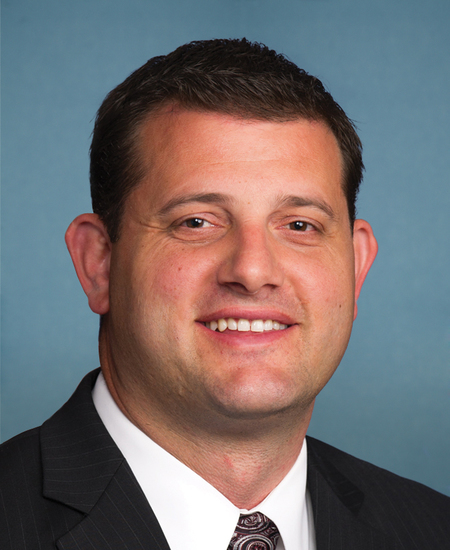
Official portrait of David Valadao
Public-source portrait

At a Glance

Highlights from available records. Missing information does not mean an activity did not occur.

Federal Election Commission

Campaign Financial Summary

FEC campaign totals are tied to this politician’s verified candidate ID and authorized committees. Contributions received are separate from independent expenditures and other outside spending.

2025–2026 cycle

FEC-reported campaign totals

FEC candidate record ↗
Receipt completeness is not yet available. Treat itemized totals as partial.
Total raised$4,927,602
Total spent$1,607,550
Candidate loansNot reported
Authorized-committee transfersNot reported
Cash on handNot reported
Debts owedNot reported
Total contributionsNot reported
IndividualsNot reported
Receipt categories and non-individual contributors
Party committees—
Other political committees—
Candidate contributions$0
Total loans—
Other federal receipts—
Operating-expense offsets—
Refunded individual contributions—

Itemized non-individual receipts

These Schedule A records exclude individual contributors and memo-only rows. They are categorized from immutable FEC committee IDs and metadata. Summary totals also include unitemized receipts, transfers, loans and adjustments, so this itemized subtotal is not expected to equal total raised.

No itemized non-individual receipts are available for this cycle.

2023–2024 cycle

FEC-reported campaign totals

FEC candidate record ↗
6 of 49 FEC receipt pages imported0 of 1 authorized committees complete · 100 Schedule A records stored. Itemized totals below are partial and will rise as the import continues.
Total raised$4,912,595
Total spent$4,915,499
Candidate loansNot reported
Authorized-committee transfersNot reported
Cash on handNot reported
Debts owedNot reported
Total contributionsNot reported
Individuals$1,515,905
Receipt categories and non-individual contributors
Party committees$25,628
Other political committees$2,214,944
Candidate contributions$0
Total loans—
Other federal receipts—
Operating-expense offsets$0
Refunded individual contributions$31,520

Itemized non-individual receipts

These Schedule A records exclude individual contributors and memo-only rows. They are categorized from immutable FEC committee IDs and metadata. Summary totals also include unitemized receipts, transfers, loans and adjustments, so this itemized subtotal is not expected to equal total raised.

PACs$6,004
Other political committees$5,519
EXCHANGE CONTRACTORS PACOther political committees · C00394452 · 1 receipt$5,000
EDISON INTERNATIONAL PACPACs · C00019653 · 1 receiptParent organization awaiting reviewPAC - Qualified$2,500
CHAMBER OF COMMERCE OF THE UNITED STATES OF AMERICA PAC (US CHAMBER PAC)PACs · C00082040 · 1 receiptParent organization awaiting reviewPAC - Qualified$2,500
GROW THE MAJORITYPACs · C00858373 · 1 receiptParent organization awaiting reviewPAC - Nonqualified$1,004
LOCKE LORD LLP PACOther political committees · C00117861 · 1 receipt$519

Canonical FEC Schedule A receipts

FEC-Identified PAC Contributions

Net itemized PAC receipts

$02025–2026 cycle

Gross itemized PAC receipts

$0Before refunds and offsets

Refunds / offsets

$0

Largest identified PAC

None recorded

This replaces the older recipient-side PAC estimate. Every row comes from the candidate campaign’s Schedule A filings and is identified by FEC committee ID. Parent organizations appear only after review; names never create the link.

No itemized PAC receipts are currently available for this cycle.

Institutional position

Current Committee Assignments

Paper Trail legislation records

Sponsored & Cosponsored Measures by Topic

HealthLabor & EmploymentImmigration
H.R. 1585 — Conrad State 30 and Physician Access Reauthorization Act

Sponsor · Conrad State 30 and Physician Access Reauthorization Act This bill modifies the Conrad 30 Waiver program, which incentivizes qualified foreign physicians to serve in underserved communities. It also extends statutory authority for the program for three years from this bill's enactment. Individuals coming to the United States under a J-1 nonimmigrant visa to receive medical training typically must leave the country and reside for two years abroad before being eligible to apply for an immigrant visa or permanent residence. The Conrad program waives this requirement for individuals who meet certain qualifications, including serving for a number of years at a health care facility in an underserved area.

EnvironmentJustice & Civil Rights
H.R. 1477 — Animal Cruelty Enforcement Act of 2025

Cosponsor · Animal Cruelty Enforcement Act of 2025 This bill establishes a new section in the Environment and Natural Resources Division of the Department of Justice to enforce federal laws concerning animal cruelty.

EducationVeteransDefense & National Security
H.R. 1965 — Veteran Education Assistance Adjustment Act

Cosponsor · Forwarded by Subcommittee to Full Committee by Voice Vote.

EducationJustice & Civil Rights
H.R. 309 — National Law Enforcement Officers Remembrance, Support, and Community Outreach Act

Cosponsor · National Law Enforcement Officers Remembrance, Support and Community Outreach Act. [ sic ] This bill temporarily directs the Department of the Interior to award a grant to the National Law Enforcement Officers Memorial Fund for the expenses associated with operating and enhancing the community outreach, public education, and officer safety and wellness programs of the National Law Enforcement Museum.

Economy & Finance
H.R. 425 — Repealing Big Brother Overreach Act

Cosponsor · Repealing Big Brother Overreach Act This bill repeals the Corporate Transparency Act. The act requires existing companies and newly created companies to report beneficial ownership information to the Department of the Treasury’s Financial Crimes Enforcement Network for purposes of addressing the financing of terrorism and money laundering.

HealthSocial Services
H.R. 2048 — Metastatic Breast Cancer Access to Care Act

Cosponsor · Metastatic Breast Cancer Access to Care Act This bill expedites payment of Social Security Disability Insurance (SSDI) benefits and eligibility for Medicare coverage for those with metastatic breast cancer (i. e. , breast cancer that has spread to other sites in the body). Specifically, the bill eliminates the 5-month waiting period for SSDI benefits and the subsequent 24-month waiting period for Medicare coverage for individuals with metastatic breast cancer.

Economy & Finance
H.R. 1628 — 761st Tank Battalion Congressional Gold Medal Act

Cosponsor · Referred to the Committee on Financial Services, and in addition to the Committee on House Administration, for a period to be subsequently determined by the Speaker, in each case for consideration of such provisions as fall within the jurisdiction of the committee concerned.

Government & Elections
H.R. 45 — FIND Act

Cosponsor · Firearm Industry Non-Discrimination Act or the FIND Act This bill prohibits the federal government from entering into contracts with an entity that discriminates against firearm trade associations or businesses that deal in firearms, ammunition, or related products. Specifically, the bill requires a federal agency to include in each contract for the procurement of goods or services awarded by the agency a clause requiring the prime contractor to certify that it (1) has no policy, practice, guidance, or directive that discriminates against a firearm entity or firearm trade association; and (2) will not adopt a policy, practice, guidance, or directive that discriminates against a firearm entity or firearm trade association during the term of the contract. The bill establishes (1) a similar requirement with respect to subcontracts, and (2) penalties for violations. The bill makes such prohibition inapplicable to a contract for the procurement of goods or services that is a sole-source contract.

Economy & Finance
H.R. 1181 — Protecting Privacy in Purchases Act

Cosponsor · Protecting Privacy in Purchases Act This bill prohibits payment card networks from using merchant codes that distinguish firearms retailers from general-merchandise retailers or sporting-goods retailers. The Department of Justice must enforce this bill and report annually on the resulting investigations and cases.

Science & Technology
H.Con.Res. 12 — Supporting the Local Radio Freedom Act.

Cosponsor · This concurrent resolution declares that Congress should not impose any new performance fee, tax, royalty, or other charge relating to the public performance of sound recordings on a local radio station for broadcasting sound recordings over the air, or on any business for such public performance of sound recordings.

Education
H.R. 768 — Holocaust Education and Antisemitism Lessons Act

Cosponsor · Holocaust Education and Antisemitism Lessons Act This bill directs the U. S. Holocaust Memorial Museum to study and report on Holocaust education efforts in states, local educational agencies (LEAs), and public elementary and secondary schools. Among other elements, the study must (1) determine whether states and LEAs require Holocaust education as part of the curriculum taught in public elementary and secondary schools, (2) identify the standards and requirements relating to Holocaust education, and (3) identify the types of instructional material used to teach students about the Holocaust.

Health
H.R. 1909 — Preventing Maternal Deaths Reauthorization Act of 2025

Cosponsor · Referred to the House Committee on Energy and Commerce.

Economy & Finance
H.R. 987 — Fair Access to Banking Act

Cosponsor · Fair Access to Banking Act This bill places restrictions on certain banks, credit unions, and payment card networks if they refuse to do business with a person who complies with the law. Restrictions include prohibiting the use of electronic funds transfer systems and lending programs, termination of an institution's depository insurance, and specified civil penalties. Banks and other specified financial institutions are allowed to deny financial services to a person only if the denial is justified by a documented failure of that person to meet quantitative, impartial, risk-based standards established in advance by the institution. This justification may not be based upon reputational risks to the institution.

Defense & National Security
H.R. 1502 — North Platte Canteen Congressional Gold Medal Act

Cosponsor · North Platte Canteen Congressional Gold Medal Act This bill provides for the award of a Congressional Gold Medal to recognize the individuals and communities that provided financial and other support for the North Platte Canteen in North Platte, Nebraska, during World War II.

Economy & Finance
H.R. 404 — Hearing Protection Act

Cosponsor · Referred to the Committee on Ways and Means, and in addition to the Committee on the Judiciary, for a period to be subsequently determined by the Speaker, in each case for consideration of such provisions as fall within the jurisdiction of the committee concerned.

Economy & Finance
H.R. 2257 — National Fallen Firefighters Memorial Coin Act

Cosponsor · Referred to the House Committee on Financial Services.

TransportationEconomy & Finance
H.R. 516 — To amend the Internal Revenue Code of 1986 to modify the railroad track maintenance credit.

Cosponsor · This measure increases the annual limit on the tax credit for qualified railroad track maintenance expenses (also referred to as the short line railroad tax credit) and expands eligibility for claiming the credit. Under current law, the tax credit is limited each tax year to $3,500 multiplied by the sum of the number of miles of railroad track owned or leased by the taxpayer (miles owned or leased) and the number of railroad track miles assigned to the taxpayer by a Class II or III railroad (miles assigned). This bill increases the annual limit to $6,100 multiplied by the sum of miles owned or leased and miles assigned. The $6,100 amount used in the calculation of the tax credit limit is adjusted for inflation for tax years beginning after 2025.

Labor & EmploymentSocial Services
H.R. 1175 — Blind Americans Return to Work Act of 2025

Cosponsor · Blind Americans Return to Work Act of 2025 This bill requires the Social Security Administration to carry out a demonstration project during which blind Social Security Disability Insurance (SSDI) beneficiaries receive reduced benefits commensurate with income above certain thresholds. Under current law, only individuals who earn under a specified monthly income, known as the substantial gainful activity (SGA) threshold, are considered disabled and thereby eligible for SSDI benefits. For blind workers, this limit is $2,700 per month in 2025. SSDI beneficiaries may earn beyond the SGA threshold for a limited period of time, known as the trial work period , before their benefits are suspended and ultimately terminate.

Health
H.R. 2199 — Restore Protections for Dialysis Patients Act

Cosponsor · Restore Protections for Dialysis Patients Act This bill specifies certain requirements for private health insurers regarding coverage of individuals with end stage renal disease (ESRD) who are also covered under Medicare. In particular, the bill specifies that insurers may not limit benefits, including limiting network composition, in a manner that will affect ESRD Medicare beneficiaries differently compared to others without ESRD. The bill additionally specifies that insurers are not required to include a particular renal dialysis provider or a particular number of such providers as part of their networks.

Science & TechnologyJustice & Civil Rights
H.R. 2978 — GUARD Act

Cosponsor · Guarding Unprotected Aging Retirees from Deception Act of 2026 or the GUARD Act of 2026 This bill allows state, local, and tribal law enforcement agencies and grantees that receive funds from certain law enforcement grant programs to use the funds to investigate general financial fraud, elder financial fraud, and pig butchering. Pig butchering refers to a confidence and investment fraud in which a victim is gradually lured into transferring increasing amounts of money, generally in the form of cryptocurrency, into a fake virtual investment. The bill allows federal law enforcement agencies to assist state, local, and tribal law enforcement agencies and fusion centers in the use of tracing tools for blockchain and related technology tools. Finally, the bill requires the Financial Crimes Enforcement Network (FinCEN) to report on efforts to combat general financial fraud, elder financial fraud, pig butchering, and scams, including an evaluation of any legislative recommendations to improve the efforts.

Justice & Civil Rights
H.R. 1551 — Protect and Serve Act of 2025

Cosponsor · Referred to the House Committee on the Judiciary.

Health
H.R. 1189 — National Plan for Epilepsy Act

Cosponsor · National Plan for Epilepsy Act This bill requires the Department of Health and Human Services (HHS) to establish a national plan, form an advisory council, and take other actions to address epilepsy. The requirements sunset on December 31, 2035. Specifically, the bill requires HHS to carry out a National Plan for Epilepsy to prevent, diagnose, treat, and cure epilepsy. In carrying out the plan, HHS must implement activities such as coordinating research and services across all federal agencies and soliciting public comments.

Health
H.R. 2821 — FDA Modernization Act 3.0

Cosponsor · FDA Modernization Act 3. 0 This bill requires the Food and Drug Administration (FDA) to publish an interim final rule implementing a provision of the Consolidated Appropriations Act of 2023 that authorized the use of certain alternatives to animal testing to support investigational use of a new drug. The rule must replace references to animal tests, data, studies, models, and research with references to nonclinical tests, data, studies, models, and research throughout the FDA’s regulations governing investigational new drug applications. The rule must be published within one year of the bill’s enactment, and must take immediate effect as an interim final rule.

Government & Elections
H.R. 1065 — Protect Our Letter Carriers Act of 2025

Cosponsor · Protect Our Letter Carriers Act of 2025 This bill requires or authorizes certain actions related to the U. S. Postal Service (USPS). The bill requires the Department of Justice to appoint an assistant U.

HousingPublic Lands
H.R. 177 — Yosemite National Park Equal Access and Fairness Act

Cosponsor · Yosemite National Park Equal Access and Fairness Act This bill modifies the Raker Act, which allowed San Francisco to dam the Hetch Hetchy Valley within Yosemite National Park, to (1) increase the annual rent San Francisco pays to the National Park Service (NPS), and (2) direct the NPS to expand public access to the reservoir and lake created by the dam. Specifically, the bill increases rent paid by the San Francisco Public Utilities Commission for the use of the park from $30,000 to $2 million per year. That amount must be adjusted annually to reflect increases in the Consumer Price Index for All Urban Consumers. The commission may not recoup such sums from wholesale water or power customers.

Economy & Finance
H.R. 1849 — Disaster Mitigation and Tax Parity Act of 2025

Cosponsor · Disaster Mitigation and Tax Parity Act of 2025 This bill excludes from gross income, for federal income tax purposes, payments received from a state catastrophe loss mitigation program by an individual for the purpose of making improvements to the individual’s property that mitigate the impact of certain disasters. Under current law, individuals may exclude from gross income, for federal income tax purposes, payments received under the Robert T. Stafford Disaster Relief and Emergency Assistance Act or the National Flood Insurance Act (as in effect on April 15, 2005) for hazard mitigation. (Some exceptions apply.

Agriculture & Food
H.R. 1464 — MODERN WIC Act of 2025

Cosponsor · More Options to Develop and Enhance Remote Nutrition in WIC Act of 2025 or the MODERN WIC Act of 2025 This bill permanently allows individuals to remotely certify their eligibility for, and receive benefits through, the Special Supplemental Nutrition Program for Women, Infants, and Children (WIC). Specifically, the bill requires that a state agency allow an individual seeking a WIC certification, recertification, or a nutritional risk evaluation to do so by phone or through video teleconference, in addition to the in-person option. A state agency has 90 days to collect data for a nutritional risk evaluation for a remotely certified individual. Further, a state agency may consider an applicant who meets the income eligibility standards to be temporarily eligible on an interim basis to participate in the program and may certify the individual for immediate participation without waiting for a nutritional risk evaluation.

Health
H.R. 1657 — Humane Cosmetics Act of 2025

Cosponsor · Referred to the House Committee on Energy and Commerce.

Labor & EmploymentGovernment & Elections
H.R. 142 — Regulations from the Executive in Need of Scrutiny Act of 2025

Cosponsor · Regulations from the Executive in Need of Scrutiny Act of 20 25 This bill revises provisions relating to congressional review of agency rulemaking. Specifically, the bill establishes a congressional approval process for a major rule. A major rule may only take effect if Congress approves of the rule. A major rule is a rule that has resulted in or is likely to result in (1) an annual effect on the economy of $100 million or more; (2) a major increase in costs or prices for consumers, individual industries, government agencies, or geographic regions; or (3) significant adverse effects on competition, employment, investment, productivity, innovation, or the ability of U.

Justice & Civil Rights
H.R. 38 — Constitutional Concealed Carry Reciprocity Act of 2025

Cosponsor · Constitutional Concealed Carry Reciprocity Act This bill establishes a federal statutory framework to regulate the carry or possession of concealed firearms across state lines. Specifically, an individual who is eligible to carry a concealed firearm in one state may carry or possess a concealed handgun (other than a machine gun or destructive device) in another state that allows its residents to carry concealed firearms. It sets forth requirements for lawful concealed carry across state lines. The bill preempts most state and local laws related to concealed carry and establishes a private right of action for a person adversely affected by interference with a concealed-carry right established by this bill.

Science & TechnologyEconomy & Finance
H.R. 1529 — Access Technology Affordability Act of 2025

Cosponsor · Referred to the House Committee on Ways and Means.

Public Lands
H.R. 179 — Proven Forest Management Act of 2025

Cosponsor · Proven Forest Management Act of 2025 This bill sets forth provisions to expedite the approval and implementation of forest management activities and establishes related requirements. First, the bill categorically excludes a forest management activity conducted on National Forest System land for reducing forest fuels from certain environmental review requirements under the National Environmental Policy Act of 1969 if the activity (1) does not exceed 10,000 acres (including not more than 3,000 acres of mechanical thinning), (2) is developed in a collaborative manner, and (3) is consistent with the forest plan developed for the relevant National Forest System land. Next, the bill directs the Forest Service to conduct forest management activities in a manner that attains multiple ecosystem benefits unless the costs associated with attaining such benefits are excessive. Additionally, the Forest Service must (1) establish any post-program ground condition criteria for a ground disturbance caused by a forest management activity required by the applicable forest plan, and (2) provide for monitoring to ascertain the attainment of relevant post-program conditions.

Agriculture & FoodEconomy & Finance
H.R. 1707 — Grown in America Act of 2025

Cosponsor · Grown in America Act of 2025 This bill establishes a new tax credit (as part of the general business tax credit) for domestically produced agriculture. Specifically, the bill allows a tax credit for the lesser of (1) 25% of domestically produced agricultural commodity expenses multiplied by the ratio of such expenses to total agricultural commodity expenses (excluding expenses for agricultural commodities that cannot feasibly be produced domestically), or (1) $100 million. (Conditions apply). To qualify for the tax credit, a business’s average expenses (over three years) for domestically produced agricultural commodities must exceed a certain percentage of total agricultural commodity expenses (excluding expenses for agricultural commodities that cannot feasibly be produced domestically).

Other
H.R. 914 — American CANS Act

Cosponsor · American Consumer Awareness of National Source Act or the American CANS Act This bill revises country-of-origin labeling requirements for canned goods. Under current country-of-origin labeling requirements, every article of foreign origin entering the United States must be legibly marked with the English name of the country of origin of the article (with certain exemptions). This bill requires country-of-origin labeling for any agricultural product packaged in a can to (1) appear on the front label of the can; or (2) be stamped, embossed, or printed on the top of the can.

HealthLabor & EmploymentEducation
H.R. 935 — Health Care Workforce Innovation Act of 2025

Cosponsor · Health Care Workforce Innovation Act of 2025 This bill establishes the Health Care Workforce Innovation Program within the Health Resources and Services Administration to provide grants to federally qualified health centers, rural health clinics, and post-secondary vocational programs for developing education and training for allied health professionals (e. g. , professionals providing clinical or non-clinical support services, community health workers, and health education specialists). Specifically, grant recipients must use the funds to carry out innovative, community-based programs to train allied health professionals, with a focus on supporting rural and underserved areas.

ImmigrationJustice & Civil Rights
H.R. 35 — Agent Raul Gonzalez Officer Safety Act

Cosponsor · Agent Raul Gonzalez Officer Safety Act This bill establishes new federal criminal offenses for operating a motor vehicle within 100 miles of the U. S. border while fleeing from a U. S.

VeteransDefense & National Security
H.R. 217 — CHIP IN for Veterans Act of 2025

Cosponsor · Communities Helping Invest through Property and Improvements Needed for Veterans Act or the CHIP IN for Veterans Act This bill makes permanent, starting December 16, 2026, the pilot program under which the Department of Veterans Affairs (VA) may accept donations of property or facilities from certain nonfederal entities (e. g. , state authorities or private entities). The bill also removes the limit on the number of donations that the VA may accept under the program.

Agriculture & Food
H.R. 295 — Fair Milk Pricing for Farmers Act

Cosponsor · Fair Milk Pricing for Farmers Act This bill requires manufacturers to report production cost and product yield information for all dairy products processed in the same facility or facilities to the Department of Agriculture (USDA) Dairy Product Mandatory Reporting Program. Further, USDA must publish a report containing the information obtained under these new requirements and publish a report every two years thereafter. As background, under the Dairy Product Mandatory Reporting Program, USDA must collect certain dairy product sales information from manufacturers and release the data on a weekly basis.

Government & Elections
H.R. 250 — To direct the Joint Committee on the Library to procure a statue of Benjamin Franklin for placement in the Capitol.

Cosponsor · This measure requires the Joint Committee on the Library to contract for and place a statue of Benjamin Franklin in the Capitol. The committee shall place the statue in a permanent public location where it is accessible during a guided tour provided by the Capitol Visitor Center. The contract must be executed by December 31, 2025, and the statue must be placed by December 31, 2026.

Congressional Service History
House · CA-22

Jan 3, 2025 – Jan 3, 2027 · Republican

House · CA-22

Jan 3, 2023 – Jan 3, 2025 · Republican

House · CA-21

Jan 3, 2021 – Jan 3, 2023 · Republican

House · CA-21

Jan 3, 2017 – Jan 3, 2019 · Republican

House · CA-21

Jan 6, 2015 – Jan 3, 2017 · Republican

House · CA-21

Jan 3, 2013 – Jan 3, 2015 · Republican