2025–2026 cycle
FEC-reported campaign totals
Receipt categories and contributing committees
No itemized political-committee receipts are available for this cycle.
Republican · U.S. House · GA-01
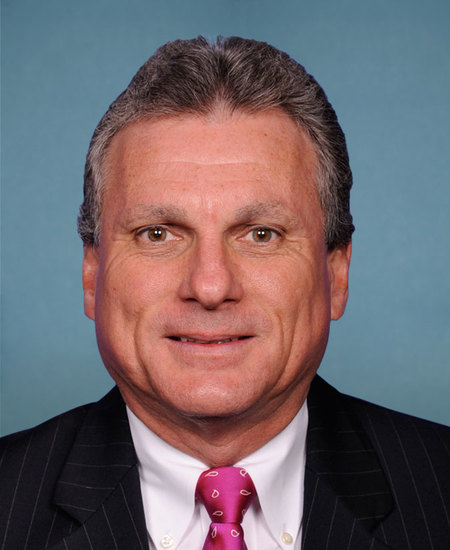
Earl L. "Buddy" Carter is a Republican U.S. representative from GA's 1 congressional district. Earl L. "Buddy" Carter has served in Congress since 2015. Paper Trail tracks organization-affiliated PAC contributions, committee assignments, legislation, and documented organization connections associated with this member.

Highlights from available records. Missing information does not mean an activity did not occur.
$218.2K
2025–2026 cycle · after refunds and offsets; not total fundraising.
Inspect records →42
2025–2026 cycle · distinct PACs with positive contribution records.
Inspect records →Other / uncategorized
2025–2026 cycle · $78.7K in gross contributions, before refunds and offsets.
Inspect records →5
Distinct linked committees and subcommittees in the available membership records.
Inspect records →Federal Election Commission
FEC campaign totals are tied to this politician’s verified candidate ID and authorized committees. Contributions received are separate from independent expenditures and other outside spending.
2025–2026 cycle
No itemized political-committee receipts are available for this cycle.
2023–2024 cycle
No itemized political-committee receipts are available for this cycle.
Money tracked by Paper Trail
Net tracked contributions
$218,2002025–2026 cycleGross tracked contributions
$218,200Before refunds and offsetsRefunds / offsets
$0Largest tracked PAC
AMERICAN OPTOMETRIC ASSOCIATION POLITICAL ACTION COMMITTEE$20,000Net tracked contributions equal positive contribution records minus negative refunds or offsets. These totals include only organization-affiliated PACs currently represented in Paper Trail and are not the politician’s total fundraising.
Parent organization not linked
PricewaterhouseCoopers
Parent organization not linked
Council of Insurance Agents & Brokers
General Dynamics Corporation
The Home Depot
Parent organization not linked
National Rural Electric Cooperative Association
Parent organization not linked
United Parcel Service
Parent organization not linked
American Institute of Certified Public Accountants
Parent organization not linked
American Bankers Association
American Council of Engineering Companies
Parent organization not linked
American Society of Anesthesiologists
Walmart Inc.
Parent organization not linked
National Multifamily Housing Council
America's Credit Unions
Structured organization taxonomy
This gross-contribution distribution excludes refunds and offsets and is not total industry support. Categories use reviewed organization profiles first, then transparent parent-organization and committee-name rules. Political and ideological committees are kept separate from commercial industries.
Institutional position
Paper Trail legislation records
Sponsor · FDA Modernization Act 3. 0 This bill requires the Food and Drug Administration (FDA) to publish an interim final rule implementing a provision of the Consolidated Appropriations Act of 2023 that authorized the use of certain alternatives to animal testing to support investigational use of a new drug. The rule must replace references to animal tests, data, studies, models, and research with references to nonclinical tests, data, studies, models, and research throughout the FDA’s regulations governing investigational new drug applications. The rule must be published within one year of the bill’s enactment, and must take immediate effect as an interim final rule.
Sponsor · Institute for Telecommunication Sciences Codification Act or the ITS Codification Act This bill provides statutory authority for the Institute for Telecommunication Sciences (ITS), which serves as the telecommunications research and engineering arm of the National Telecommunications and Information Administration. The bill also directs ITS to establish an initiative to support the development of emergency communication and tracking technologies for use in locating trapped individuals in confined spaces (e. g. , underground mines) where conventional radio communication is limited.
Sponsor · Referred to the House Committee on Energy and Commerce.
Cosponsor · Referred to the Committee on Energy and Commerce, and in addition to the Committee on Ways and Means, for a period to be subsequently determined by the Speaker, in each case for consideration of such provisions as fall within the jurisdiction of the committee concerned.
Cosponsor · Modernizing Access to Our Public Oceans Act This bill directs the National Oceanic and Atmospheric Administration (NOAA) to publish geospatial data related to public recreational use of federal waterways (e. g. , boating and fishing). Under the bill, NOAA must consult with relevant stakeholders (including state and local governments, Indian tribes, and Native Hawaiian organizations) to develop and adopt standards for the coordination and dissemination of geospatial data relating to fishing restrictions and recreational vessels' use of federal waterways, including the exclusive economic zone of the United States (EEZ).
Cosponsor · Protection of Women and Girls in Sports Act of 2025 This bill generally prohibits school athletic programs from allowing individuals whose biological sex at birth was male to participate in programs that are for women or girls. Specifically, the bill provides that it is a violation of Title IX of the Education Amendments of 1972 for federally funded education programs or activities to operate, sponsor, or facilitate athletic programs or activities that allow individuals of the male sex to participate in programs or activities that are designated for women or girls. (Title IX prohibits discrimination on the basis of sex in federally funded education programs or activities, including in public elementary and secondary schools and in colleges and universities. ) Under the bill, sex is based on an individual's reproductive biology and genetics at birth.
Cosponsor · Creating Resources for Every American To Experiment with Artificial Intelligence Act of 2025 or the CREATE AI Act of 2025 This bill establishes a national program to provide U. S. researchers, educators, and students with access to artificial intelligence (AI) data, computational resources, educational tools and services, and testbeds. The program, to be known as the National Artificial Intelligence Research Resource (NAIRR), must be established by the National Science Foundation (NSF) to improve U.
Cosponsor · Destruction of Hazardous Imports Act This bill expands the Food and Drug Administration’s (FDA’s) authority to require the destruction of certain items that are refused import into the United States and pose a risk to public health. Under current law, imported food, drugs, medical devices, tobacco products, and cosmetics are subject to FDA review. If an imported item is deficient in a specified manner (e. g.
Cosponsor · National Plan for Epilepsy Act This bill requires the Department of Health and Human Services (HHS) to establish a national plan, form an advisory council, and take other actions to address epilepsy. The requirements sunset on December 31, 2035. Specifically, the bill requires HHS to carry out a National Plan for Epilepsy to prevent, diagnose, treat, and cure epilepsy. In carrying out the plan, HHS must implement activities such as coordinating research and services across all federal agencies and soliciting public comments.
Cosponsor · Referred to the House Committee on Financial Services.
Cosponsor · Repealing Big Brother Overreach Act This bill repeals the Corporate Transparency Act. The act requires existing companies and newly created companies to report beneficial ownership information to the Department of the Treasury’s Financial Crimes Enforcement Network for purposes of addressing the financing of terrorism and money laundering.
Cosponsor · Sunshine Protection Act of 2025 This bill makes daylight saving time the new, permanent standard time. States with areas exempt from daylight saving time may choose the standard time for those areas.
Cosponsor · This concurrent resolution declares that Congress should not impose any new performance fee, tax, royalty, or other charge relating to the public performance of sound recordings on a local radio station for broadcasting sound recordings over the air, or on any business for such public performance of sound recordings.
Cosponsor · Restore Protections for Dialysis Patients Act This bill specifies certain requirements for private health insurers regarding coverage of individuals with end stage renal disease (ESRD) who are also covered under Medicare. In particular, the bill specifies that insurers may not limit benefits, including limiting network composition, in a manner that will affect ESRD Medicare beneficiaries differently compared to others without ESRD. The bill additionally specifies that insurers are not required to include a particular renal dialysis provider or a particular number of such providers as part of their networks.
Cosponsor · Chiropractic Medicare Coverage Modernization Act of 2025 This bill expands Medicare coverage of chiropractic services to include all services provided by chiropractors, rather than only subluxation corrections through manual manipulation of the spine.
Cosponsor · Rebuild America’s Health Care Schools Act of 2025 This bill allows hospitals to receive reimbursement under Medicare for certain costs associated with training nursing and allied health students in settings other than the hospital itself. Currently, hospitals may receive reimbursement under Medicare for the reasonable costs associated with training nursing and allied health students if certain conditions are met; the criteria vary depending on whether the students are enrolled in an educational program that is operated by the hospital or another entity. If the students are part of a program that is operated by another entity, the training must occur at the hospital itself or in areas immediately surrounding the hospital in order to qualify for reimbursement (among other requirements). The bill allows hospitals to receive reimbursement for these costs if the training is conducted at an entity that is related to the hospital (i.
Cosponsor · Accelerating Access to Dementia and Alzheimer’s Provider Training Act or the AADAPT Act This bill reauthorizes through FY2031 and revises the Technology-enabled Collaborative Learning Program, which is administered by the Health Resources and Services Administration. This program provides grants to support the use of technology that connects different health care professionals to improve access to health care, including specialty care, for certain rural and medically underserved populations. The bill explicitly adds dementia care to the types of specialty care that the program may address.
Cosponsor · This measure increases the annual limit on the tax credit for qualified railroad track maintenance expenses (also referred to as the short line railroad tax credit) and expands eligibility for claiming the credit. Under current law, the tax credit is limited each tax year to $3,500 multiplied by the sum of the number of miles of railroad track owned or leased by the taxpayer (miles owned or leased) and the number of railroad track miles assigned to the taxpayer by a Class II or III railroad (miles assigned). This bill increases the annual limit to $6,100 multiplied by the sum of miles owned or leased and miles assigned. The $6,100 amount used in the calculation of the tax credit limit is adjusted for inflation for tax years beginning after 2025.
Cosponsor · Firearm Industry Non-Discrimination Act or the FIND Act This bill prohibits the federal government from entering into contracts with an entity that discriminates against firearm trade associations or businesses that deal in firearms, ammunition, or related products. Specifically, the bill requires a federal agency to include in each contract for the procurement of goods or services awarded by the agency a clause requiring the prime contractor to certify that it (1) has no policy, practice, guidance, or directive that discriminates against a firearm entity or firearm trade association; and (2) will not adopt a policy, practice, guidance, or directive that discriminates against a firearm entity or firearm trade association during the term of the contract. The bill establishes (1) a similar requirement with respect to subcontracts, and (2) penalties for violations. The bill makes such prohibition inapplicable to a contract for the procurement of goods or services that is a sole-source contract.
Cosponsor · Subcommittee Hearings Held
Cosponsor · Animal Cruelty Enforcement Act of 2025 This bill establishes a new section in the Environment and Natural Resources Division of the Department of Justice to enforce federal laws concerning animal cruelty.
Cosponsor · Referred to the Subcommittee on Coast Guard and Maritime Transportation.
Cosponsor · Maintaining Investments in New Innovation Act This bill requires drug products with genetically targeted technology to have had market approval for at least 11 years in order to qualify for the Medicare Drug Price Negotiation Program. (The program requires the Centers for Medicare & Medicaid Services to negotiate the prices of certain prescription drugs under Medicare beginning in 2026. Among other requirements, drugs must have had market approval for at least 7 years (for drug products) or 11 years (for biologics) to qualify for negotiation. )
Cosponsor · DMEPOS Relief Act of 2025 This bill extends until December 31, 2025, a higher payment rate (known as the 75/25 blended rate) for durable medical equipment in nonrural or noncontiguous areas under Medicare.
Cosponsor · North Platte Canteen Congressional Gold Medal Act This bill provides for the award of a Congressional Gold Medal to recognize the individuals and communities that provided financial and other support for the North Platte Canteen in North Platte, Nebraska, during World War II.
Cosponsor · Love Lives On Act of 2025 This bill extends entitlement for various benefit programs and services for surviving spouses of deceased members of the Armed Forces or veterans. The bill provides that the remarriage of a surviving spouse must not bar the furnishing of dependency and indemnity compensation or special pension benefits to such spouse. Additionally, the Department of Defense may not terminate the payment of an annuity for a surviving spouse under the Survivor Benefit Plan solely because the surviving spouse remarries. The bill also expands the definition of a dependent under TRICARE to include a remarried widow or widower whose subsequent marriage has ended due to death, divorce, or annulment.
Cosponsor · Referred to the Committee on Ways and Means, and in addition to the Committee on the Judiciary, for a period to be subsequently determined by the Speaker, in each case for consideration of such provisions as fall within the jurisdiction of the committee concerned.
Cosponsor · Metastatic Breast Cancer Access to Care Act This bill expedites payment of Social Security Disability Insurance (SSDI) benefits and eligibility for Medicare coverage for those with metastatic breast cancer (i. e. , breast cancer that has spread to other sites in the body). Specifically, the bill eliminates the 5-month waiting period for SSDI benefits and the subsequent 24-month waiting period for Medicare coverage for individuals with metastatic breast cancer.
Cosponsor · Alternatives to Prevent Addiction In the Nation Act or the Alternatives to PAIN Act This bill reduces cost-sharing and prohibits the imposition of certain utilization requirements under the Medicare prescription drug benefit for certain non-opioid pain management drugs. Specifically, the bill requires such drugs to be covered without a deductible and to be placed on the lowest cost-sharing tier (if any). The bill also prohibits the imposition of prior authorization requirements (i. e.
Cosponsor · Referred to the House Committee on Education and Workforce.
Cosponsor · Incentivizing Readiness and Environmental Protection Integration Sales Act of 2025 This bill excludes the gain from the sale of a qualified real property interest under the Readiness and Environmental Protection Integration (REPI) Program from gross income for federal tax purposes. (Some limitations apply. ) As background, the REPI Program supports cost-sharing agreements between the Armed Forces, other federal agencies, state and local governments, and certain private organizations to address land use near military installations, address environmental restrictions that limit military activities, and increase military installation resilience. Under the bill, the exclusion from gross income applies to gain from the sale of a real property interest (pursuant to an agreement under the REPI Program) to a state or U.
Cosponsor · Combating Illicit Xylazine Act This bill regulates xylazine under the Controlled Substances Act (CSA). Xylazine, also known as tranq , is a nonopioid sedative and pain reliever that is approved for use in animals. Recently, the Drug Enforcement Administration (DEA) has reported an increase in trafficking of fentanyl mixed with xylazine. This bill adds xylazine, including its salts, isomers, and salts of isomers, to schedule III of the CSA.
Cosponsor · Referred to the House Committee on Ways and Means.
Cosponsor · Federal Firearms Licensee Protection Act of 2025 This bill modifies criminal penalties for an offense involving the theft of a firearm from a licensed importer, manufacturer, or dealer, or from their business premises. Specifically, the bill does the following: increases from 10 to 20 years the maximum prison term, and creates a 3- or 5-year mandatory minimum prison term for an offense that occurs during the commission of a burglary or robbery. An attempt to commit an offense is subject to the same penalties as a substantive offense.
Cosponsor · National Law Enforcement Officers Remembrance, Support and Community Outreach Act. [ sic ] This bill temporarily directs the Department of the Interior to award a grant to the National Law Enforcement Officers Memorial Fund for the expenses associated with operating and enhancing the community outreach, public education, and officer safety and wellness programs of the National Law Enforcement Museum.
Cosponsor · Referred to the House Committee on Ways and Means.
Cosponsor · Regulations from the Executive in Need of Scrutiny Act of 20 25 This bill revises provisions relating to congressional review of agency rulemaking. Specifically, the bill establishes a congressional approval process for a major rule. A major rule may only take effect if Congress approves of the rule. A major rule is a rule that has resulted in or is likely to result in (1) an annual effect on the economy of $100 million or more; (2) a major increase in costs or prices for consumers, individual industries, government agencies, or geographic regions; or (3) significant adverse effects on competition, employment, investment, productivity, innovation, or the ability of U.
Cosponsor · Prescription Drug Transparency and Affordability Act This bill requires pharmacy benefit managers (PBMs) to report, at least once every six months, prescription drug pricing, payment, and utilization data to the health insurance plans for which the PBM provides services. Specifically, a PBM contracted to provide services to an employer or sponsor offering a large group health insurance plan (i. e. , a plan with at least 100 employees or participants) must report to the plan certain information for prescription drug claims under the plan.
Cosponsor · Fair Access to Banking Act This bill places restrictions on certain banks, credit unions, and payment card networks if they refuse to do business with a person who complies with the law. Restrictions include prohibiting the use of electronic funds transfer systems and lending programs, termination of an institution's depository insurance, and specified civil penalties. Banks and other specified financial institutions are allowed to deny financial services to a person only if the denial is justified by a documented failure of that person to meet quantitative, impartial, risk-based standards established in advance by the institution. This justification may not be based upon reputational risks to the institution.
Cosponsor · Protecting Access to Ground Ambulance Medical Services Act of 2025 This bill extends the specialized rate increase for Medicare payment of ground ambulance services in rural areas for an additional three years (until January 1, 2028).
Cosponsor · Protecting Privacy in Purchases Act This bill prohibits payment card networks from using merchant codes that distinguish firearms retailers from general-merchandise retailers or sporting-goods retailers. The Department of Justice must enforce this bill and report annually on the resulting investigations and cases.
Jan 3, 2025 – Jan 3, 2027 · Republican
Jan 3, 2023 – Jan 3, 2025 · Republican
Jan 3, 2021 – Jan 3, 2023 · Republican
Jan 3, 2019 – Jan 3, 2021 · Republican
Jan 3, 2017 – Jan 3, 2019 · Republican
Jan 6, 2015 – Jan 3, 2017 · Republican