2025–2026 cycle
FEC-reported campaign totals
Receipt categories and contributing committees
No itemized political-committee receipts are available for this cycle.
Republican · U.S. House · GA-12
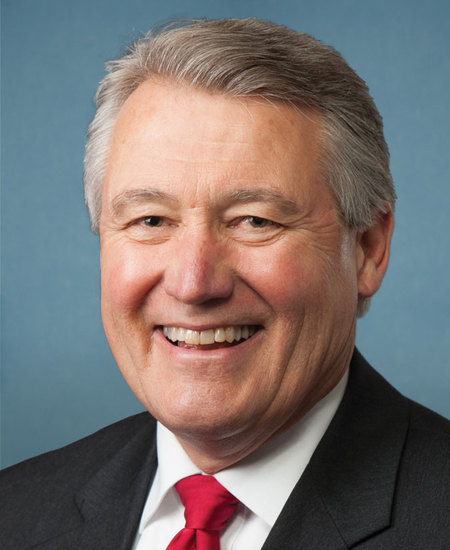
Rick W. Allen is a Republican U.S. representative from GA's 12 congressional district. Rick W. Allen serves as Vice Chair of the House Committee on Energy and Commerce Subcommittee on Communications and Technology. Rick W. Allen has served in Congress since 2015. Paper Trail tracks organization-affiliated PAC contributions, committee assignments, legislation, and documented organization connections associated with this member.

Highlights from available records. Missing information does not mean an activity did not occur.
$175.5K
2025–2026 cycle · after refunds and offsets; not total fundraising.
Inspect records →46
2025–2026 cycle · distinct PACs with positive contribution records.
Inspect records →Other / uncategorized
2025–2026 cycle · $31K in gross contributions, before refunds and offsets.
Inspect records →6
Distinct linked committees and subcommittees in the available membership records.
Inspect records →Federal Election Commission
FEC campaign totals are tied to this politician’s verified candidate ID and authorized committees. Contributions received are separate from independent expenditures and other outside spending.
2025–2026 cycle
No itemized political-committee receipts are available for this cycle.
Money tracked by Paper Trail
Net tracked contributions
$175,4932025–2026 cycleGross tracked contributions
$175,493Before refunds and offsetsRefunds / offsets
$0Largest tracked PAC
NATIONAL CHICKEN COUNCIL POLITICAL ACTION COMMITTEE (FKA) NATIONAL BROILER COUNCIL PAC$10,000Net tracked contributions equal positive contribution records minus negative refunds or offsets. These totals include only organization-affiliated PACs currently represented in Paper Trail and are not the politician’s total fundraising.
Parent organization not linked
The Home Depot
Aflac Incorporated
National Association of Realtors
National Rural Electric Cooperative Association
Parent organization not linked
American Institute of Certified Public Accountants
Parent organization not linked
American Crystal Sugar Company
American Israel Public Affairs Committee
United Parcel Service
National Association of Home Builders
American Bankers Association
American Council of Engineering Companies
National Beer Wholesalers Association
Parent organization not linked
America's Credit Unions
Parent organization not linked
Charter Communications
Parent organization not linked
Walmart Inc.
Parent organization not linked
The Boeing Company
Parent organization not linked
American Hospital Association
National Air Traffic Controllers Association
Parent organization not linked
Structured organization taxonomy
This gross-contribution distribution excludes refunds and offsets and is not total industry support. Categories use reviewed organization profiles first, then transparent parent-organization and committee-name rules. Political and ideological committees are kept separate from commercial industries.
Institutional position
Paper Trail legislation records
Cosponsor · Protection of Women and Girls in Sports Act of 2025 This bill generally prohibits school athletic programs from allowing individuals whose biological sex at birth was male to participate in programs that are for women or girls. Specifically, the bill provides that it is a violation of Title IX of the Education Amendments of 1972 for federally funded education programs or activities to operate, sponsor, or facilitate athletic programs or activities that allow individuals of the male sex to participate in programs or activities that are designated for women or girls. (Title IX prohibits discrimination on the basis of sex in federally funded education programs or activities, including in public elementary and secondary schools and in colleges and universities. ) Under the bill, sex is based on an individual's reproductive biology and genetics at birth.
Cosponsor · No Taxpayer Funding for Abortion and Abortion Insurance Full Disclosure Act of 2025 This bill modifies provisions relating to federal funding for, and health insurance coverage of, abortions. Specifically, the bill prohibits the use of federal funds for abortions or for health coverage that includes abortions. Such restrictions extend to the use of funds in the budget of the District of Columbia. Additionally, abortions may not be provided in a federal health care facility or by a federal employee.
Cosponsor · Repealing Big Brother Overreach Act This bill repeals the Corporate Transparency Act. The act requires existing companies and newly created companies to report beneficial ownership information to the Department of the Treasury’s Financial Crimes Enforcement Network for purposes of addressing the financing of terrorism and money laundering.
Cosponsor · Grown in America Act of 2025 This bill establishes a new tax credit (as part of the general business tax credit) for domestically produced agriculture. Specifically, the bill allows a tax credit for the lesser of (1) 25% of domestically produced agricultural commodity expenses multiplied by the ratio of such expenses to total agricultural commodity expenses (excluding expenses for agricultural commodities that cannot feasibly be produced domestically), or (1) $100 million. (Conditions apply). To qualify for the tax credit, a business’s average expenses (over three years) for domestically produced agricultural commodities must exceed a certain percentage of total agricultural commodity expenses (excluding expenses for agricultural commodities that cannot feasibly be produced domestically).
Cosponsor · Referred to the Committee on Financial Services, and in addition to the Committee on House Administration, for a period to be subsequently determined by the Speaker, in each case for consideration of such provisions as fall within the jurisdiction of the committee concerned.
Cosponsor · This concurrent resolution declares that Congress should not impose any new performance fee, tax, royalty, or other charge relating to the public performance of sound recordings on a local radio station for broadcasting sound recordings over the air, or on any business for such public performance of sound recordings.
Cosponsor · New Source Review Permitting Improvement Act This bill modifies terminology for purposes of the New Source Review (NSR) permitting program of the Environmental Protection Agency (EPA). In order for a change to a stationary source to be a modification (a change to a stationary source that increases the air pollutant emissions or results in new pollutants) for purposes of the NSR permitting program, the maximum hourly emission rate achievable by such source must be higher than the maximum hourly rate achievable by such source during any hour in the 10-year period preceding the change. A change at a stationary source is not considered to be a modification under the bill if it is designed to (1) reduce the amount of any air pollutant emitted; or (2) restore, maintain, or improve the reliability of operations at, or safety of, the source. However, such changes are not excepted if the EPA determines the increase in the maximum achievable hourly emission rate from such change would cause an adverse effect on human health or the environment.
Cosponsor · This measure increases the annual limit on the tax credit for qualified railroad track maintenance expenses (also referred to as the short line railroad tax credit) and expands eligibility for claiming the credit. Under current law, the tax credit is limited each tax year to $3,500 multiplied by the sum of the number of miles of railroad track owned or leased by the taxpayer (miles owned or leased) and the number of railroad track miles assigned to the taxpayer by a Class II or III railroad (miles assigned). This bill increases the annual limit to $6,100 multiplied by the sum of miles owned or leased and miles assigned. The $6,100 amount used in the calculation of the tax credit limit is adjusted for inflation for tax years beginning after 2025.
Cosponsor · Choice in Automobile Retail Sales Act of 2025 This bill limits the authority of the Environmental Protection Agency (EPA) with regard to regulating emissions standards for new motor vehicles. Specifically, the EPA is prohibited from prescribing a regulation related to new motor vehicle emissions standards that (1) mandates the use of any specific technology, or (2) results in limited availability of new motor vehicles based on the type of new motor vehicle engine.
Cosponsor · Firearm Industry Non-Discrimination Act or the FIND Act This bill prohibits the federal government from entering into contracts with an entity that discriminates against firearm trade associations or businesses that deal in firearms, ammunition, or related products. Specifically, the bill requires a federal agency to include in each contract for the procurement of goods or services awarded by the agency a clause requiring the prime contractor to certify that it (1) has no policy, practice, guidance, or directive that discriminates against a firearm entity or firearm trade association; and (2) will not adopt a policy, practice, guidance, or directive that discriminates against a firearm entity or firearm trade association during the term of the contract. The bill establishes (1) a similar requirement with respect to subcontracts, and (2) penalties for violations. The bill makes such prohibition inapplicable to a contract for the procurement of goods or services that is a sole-source contract.
Cosponsor · Maintaining Investments in New Innovation Act This bill requires drug products with genetically targeted technology to have had market approval for at least 11 years in order to qualify for the Medicare Drug Price Negotiation Program. (The program requires the Centers for Medicare & Medicaid Services to negotiate the prices of certain prescription drugs under Medicare beginning in 2026. Among other requirements, drugs must have had market approval for at least 7 years (for drug products) or 11 years (for biologics) to qualify for negotiation. )
Cosponsor · This joint resolution proposes a constitutional amendment prohibiting total outlays for a fiscal year from exceeding total receipts for that fiscal year unless Congress authorizes the excess by a three-fifths roll call vote of each chamber. The prohibition excludes outlays for repayment of debt principal and receipts derived from borrowing. The amendment requires a three-fifths roll call vote of each chamber to increase the public debt limit. It prohibits a bill to increase revenue from becoming law unless it has been approved by a majority roll call vote of each chamber.
Cosponsor · North Platte Canteen Congressional Gold Medal Act This bill provides for the award of a Congressional Gold Medal to recognize the individuals and communities that provided financial and other support for the North Platte Canteen in North Platte, Nebraska, during World War II.
Cosponsor · Safeguard American Voter Eligibility Act or the SAVE Act This bill requires individuals to provide documentary proof of U. S. citizenship when registering to vote in federal elections. Specifically, the bill prohibits states from accepting and processing an application to register to vote in a federal election unless the applicant presents documentary proof of U.
Cosponsor · Referred to the House Committee on Education and Workforce.
Cosponsor · This joint resolution proposes a constitutional amendment requiring the Supreme Court to be composed of nine Justices—one Chief Justice and eight Associate Justices.
Cosponsor · Regulations from the Executive in Need of Scrutiny Act of 20 25 This bill revises provisions relating to congressional review of agency rulemaking. Specifically, the bill establishes a congressional approval process for a major rule. A major rule may only take effect if Congress approves of the rule. A major rule is a rule that has resulted in or is likely to result in (1) an annual effect on the economy of $100 million or more; (2) a major increase in costs or prices for consumers, individual industries, government agencies, or geographic regions; or (3) significant adverse effects on competition, employment, investment, productivity, innovation, or the ability of U.
Cosponsor · Fair Access to Banking Act This bill places restrictions on certain banks, credit unions, and payment card networks if they refuse to do business with a person who complies with the law. Restrictions include prohibiting the use of electronic funds transfer systems and lending programs, termination of an institution's depository insurance, and specified civil penalties. Banks and other specified financial institutions are allowed to deny financial services to a person only if the denial is justified by a documented failure of that person to meet quantitative, impartial, risk-based standards established in advance by the institution. This justification may not be based upon reputational risks to the institution.
Jan 3, 2025 – Jan 3, 2027 · Republican
Jan 3, 2023 – Jan 3, 2025 · Republican
Jan 3, 2021 – Jan 3, 2023 · Republican
Jan 3, 2019 – Jan 3, 2021 · Republican
Jan 3, 2017 – Jan 3, 2019 · Republican
Jan 6, 2015 – Jan 3, 2017 · Republican